

A coil transfer cart is a specialized heavy-duty piece of equipment designed to safely transport large and heavy metal coils (such as steel or aluminum rolls). These carts, intended for in-plant use, feature a robust steel body and V-shaped cradles or clamping mechanisms that securely hold the coil in place during transport. This prevents the roll from slipping and helps avoid potential workplace accidents. As part of a comprehensive coil handling system, coil transfer carts make the transportation of heavy coils within industrial facilities both safer and more efficient.
-
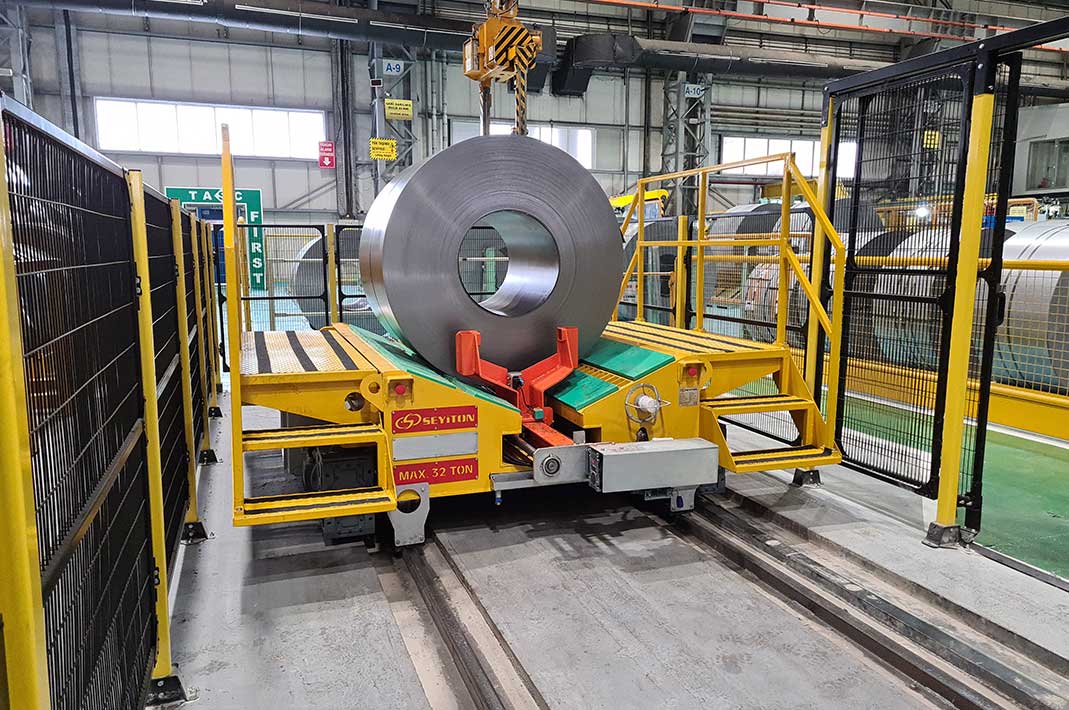
- Rail-guided Coil Transfer Cart
-
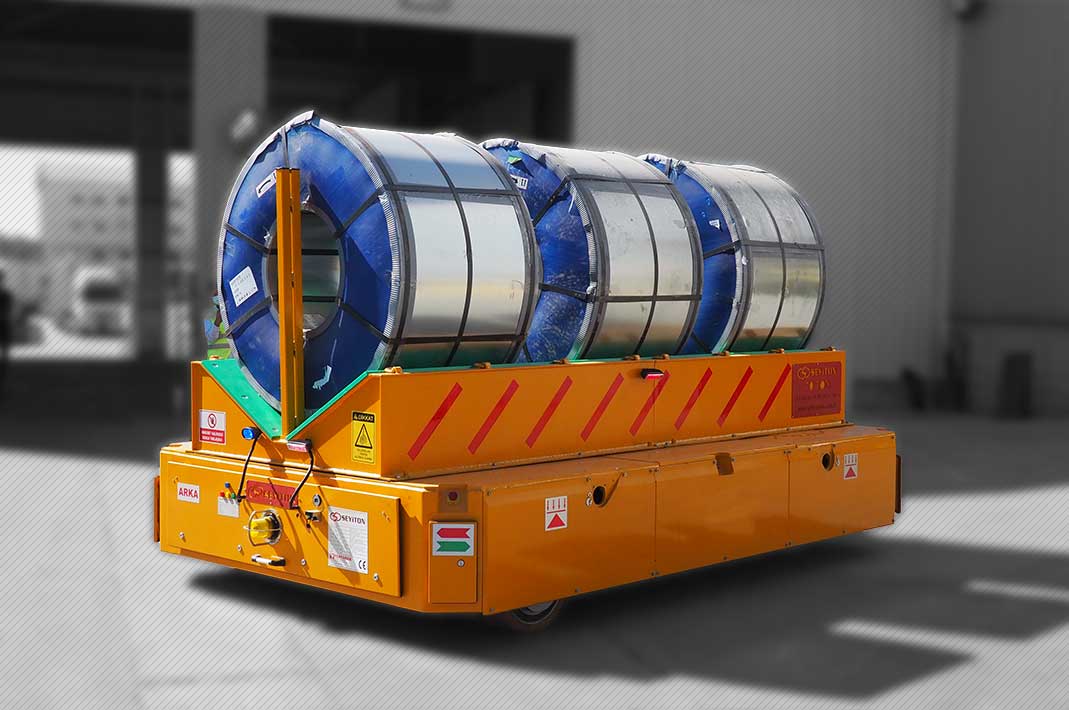
- 70 Tons Coil Cart
These carts can be designed to carry a wide range of coil sizes and weights. From small sheet metal rolls to massive steel coils, suitable models are available for every need. Modern coil transfer carts can be manufactured with carrying capacities ranging from 5 tons up to several hundred tons. This allows them to handle even the most demanding coil transportation applications in steel plants or heavy industrial facilities. Each cart can be customized according to the requirements of the working environment – platform dimensions, load capacity, and power supply can all be adapted to fit the specific needs of your operation. As a result, it is possible to create a coil transfer system that offers the ideal solution for every facility.
Main Advantages of Coil Transfer Carts
Safe Transportation
Coil transfer carts provide a stable platform for the secure movement of heavy coils. By eliminating the risk of slipping or falling that can occur when using forklifts or cranes, they significantly improve workplace safety. The V-shaped cradles or special clamps hold the coil firmly in place, ensuring both worker protection and damage-free delivery of materials to their destination. This system greatly enhances reliability, especially in the transportation of steel coils.
High Efficiency
In production facilities, it is crucial for coils to reach the right place at the right time. Coil transfer carts increase operational efficiency by transporting heavy rolls quickly and directly to production lines or storage areas. They minimize crane waiting times, speed up material flow, and reduce production interruptions. Since a single operator can control the cart remotely, manpower is used more efficiently.
Heavy Load Capacity
Thanks to their heavy-duty design, these carts can easily carry loads weighing several tons. Many coil transfer carts are manufactured with capacities of 10, 20, or 30 tons, and some special models can handle over 50 tons. This high load capacity enables the transfer of large coils in a single operation, eliminating the need for multiple transports. As a result, large-scale material handling operations can be completed with fewer trips.
Flexibility and Customization
Coil handling requirements vary depending on the sector and the facility. For this reason, coil transfer carts are offered with a customizable structure. Depending on operational needs, they can be designed as rail-guided models or steerable, trackless models powered by batteries. Features such as crab steering or independent wheel steering provide maneuverability in narrow spaces. Optional integrations like safety sensors, automatic coil positioning systems, or overload protection can also be added. This flexibility ensures that each business has a coil handling solution perfectly suited to its workflow.
Labor and Cost Savings
Using a coil transfer cart can reduce the need for multiple cranes or forklifts to perform the same task. A single operator can control the cart remotely to move coils safely, which means more work can be done with fewer personnel. Additionally, the reduction in manual lifting and handling minimizes the risk of workplace accidents and material damage. In the long term, the increased efficiency and reduced downtime result in significant operational cost savings.
Technical Features and Capabilities
Various Power Supply Options
Coil transfer carts can be manufactured with different drive systems depending on the facility’s infrastructure. Battery-powered models provide maximum mobility, wireless operation, and low emissions. Rail-powered systems (supplied with mains electricity through rails) offer continuous and powerful transport along fixed routes. Cable drum and busbar systems allow for uninterrupted 24-hour operation, as power is constantly supplied through cables or overhead busbars. These options allow you to choose the most suitable cart based on your operational priorities—whether you need free movement or continuous-duty performance.
Rail-Guided and Trackless Designs
Depending on the application, coil transfer carts are available in both rail-guided and trackless (wheeled) configurations. Rail-guided carts travel along fixed tracks embedded in the factory floor and provide exceptional safety and stability on defined transfer routes (for example, from a coil storage area to the production line). Trackless, steerable coil transfer carts, on the other hand, operate freely on the floor and are typically battery-powered. With advanced maneuverability such as turning in tight spaces or performing crab movements these carts can reach multiple areas of a facility without requiring rails. This flexibility allows a single vehicle to transport coils between several production lines or adapt easily to changing plant layouts.
Robust Construction and Safety
Coil transfer carts are built for long-term operation in industrial environments. Their bodies are made of reinforced welded steel structures for superior strength. The platform can include V-shaped beds, coil cradles, or roller supports to secure the coil during transport. The wheels and running gear are designed to withstand concentrated loads—steel wheels are used on rail systems, while abrasion-resistant rubber wheels are preferred for floor-running models. All carts come equipped with emergency stop buttons, warning lights, and audible alarms as standard safety features. Optional systems such as collision avoidance sensors and load-balancing mechanisms can also be integrated for enhanced safety.
Precision Control and Automation
These carts are equipped with user-friendly control systems that allow precise adjustment of speed, direction, and braking. Smooth start-and-stop drive circuits enable vibration-free movement of heavy loads. Advanced models can be integrated into the plant’s automation systems or programmed to move autonomously along predefined routes as AGVs (Automated Guided Vehicles). This offers a forward-looking advantage for facilities aiming for Industry 4.0 integration. In conclusion, coil transfer carts provide the infrastructure for both manual and automated operation, ensuring high efficiency and operational safety.
Coil Transfer Cart Projects
Industry Applications of Coil Transfer Systems
Coil transfer systems are used across various industries to facilitate the internal transportation of heavy coil materials. The main application areas and sectors include:
Automotive Industry:
In automotive factories, large steel sheet coils are processed for press lines. Coil transfer carts safely move these heavy coils from storage areas to press stations. They ensure that the required sheet material is delivered quickly to production lines, reducing waiting times and increasing efficiency. Compared to manual or forklift transport, coil transfer carts significantly enhance workplace safety, making them a preferred solution in the automotive industry.
Steel Production (Rolling Mills):
In iron and steel plants, hot or cold rolled coils must be transferred between production stages. Coil transfer carts are widely used for handling these heavy steel coils. For example, they transport coils from the hot rolling output to the cooling zone or storage area. Specially designed models operate reliably even in high-temperature environments, ensuring safe coil transport. In the steel industry, these carts reduce crane traffic, improve efficiency, and minimize workers’ direct contact with hot or heavy materials.
Metal Processing and Sheet Industry:
Coil transfer carts also play an essential role in metalworking facilities, sheet metal producers, and white goods factories. They are used to feed coils into slitting lines, cut-to-length lines, or press machines. This enables the quick and safe positioning of heavy coils into machinery, preventing surface damage to sheets during handling. They also help maintain a smooth material flow between production lines.
Logistics and Storage:
In logistics centers or factory warehouses dealing with large coils, coil transfer carts enhance efficiency. They can transport coils to racks, stack them, or move them to truck loading points. For instance, in a steel service center, a single coil transfer cart can replace multiple cranes to organize coils of various sizes and weights. This approach speeds up warehouse operations and improves maneuverability in narrow spaces, resulting in more efficient logistics processes.
In summary, coil transfer carts have become a standard solution across many industries—from automotive and steel production to metal processing and logistics centers. In any sector where raw materials are handled in coil form, these carts offer a safe, efficient, and value-adding transport solution for industrial operations.